
Otoplasty
Otoplasty (Ear Surgery)
Prominent ears are among the most common features of the face that people wish to change, often since childhood. Otoplasty brings the ears closer to the head and gives them a natural contour.
As an ENT surgeon, Dr. Khair works with the anatomy of the ear every day. The aim is a natural result: ears that no longer draw attention, without an ‘operated’ appearance.
What are prominent ears?
Ears are considered prominent when they stand out from the head more than usual. The most common causes are an underdeveloped fold of the ear cartilage (the antihelix) and an enlarged bowl of the ear (the concha), sometimes both. One or both ears may be affected, and they may differ from each other.
Surgical correction approaches
Otoplasty is tailored to the cause of the prominence. The incision is usually placed in the natural crease behind the ear, where the scar is well hidden.
- Creating or enhancing the antihelical fold with permanent sutures
- Reducing or setting back an enlarged concha
- Gently reshaping the cartilage where needed
- Adjusting the earlobe for a balanced overall result
Consultation and assessment
Dr. Khair examines both ears, identifies which parts of the cartilage cause the prominence and discusses the expected result. For children, ear correction is usually considered from around school age, when the ear has reached most of its adult size, and the child's own wish is an important part of the decision. Adults can be treated at any age.
Expected recovery
- A protective head bandage is worn for the first few days
- A soft headband is then usually worn, especially at night, for several weeks
- Tenderness and swelling are common at first and gradually subside
- Return to school or office work is often possible after about one week
- Contact sports are avoided for several weeks to protect the ears
Risks and limitations
Possible risks include bleeding, infection, changes in skin sensation, visible or thickened scars, residual asymmetry and partial recurrence of prominence. Perfect symmetry is not always achievable, since both ears often differ naturally. These points are discussed in consultation.
Before & After
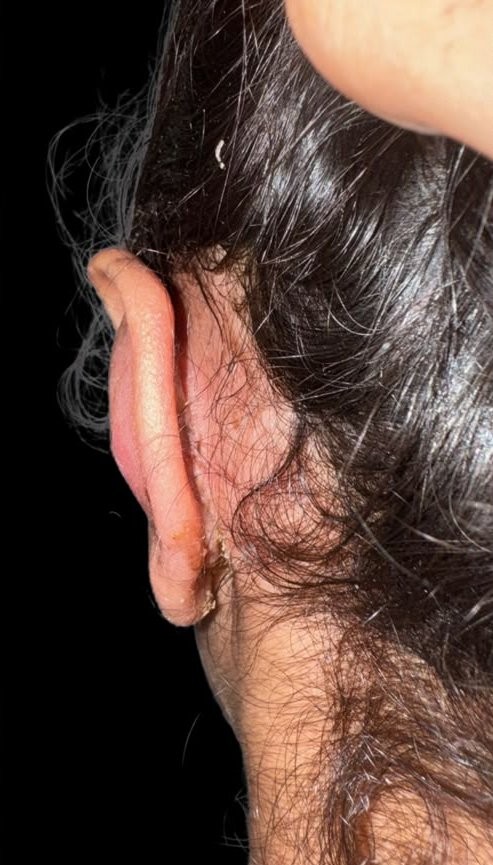
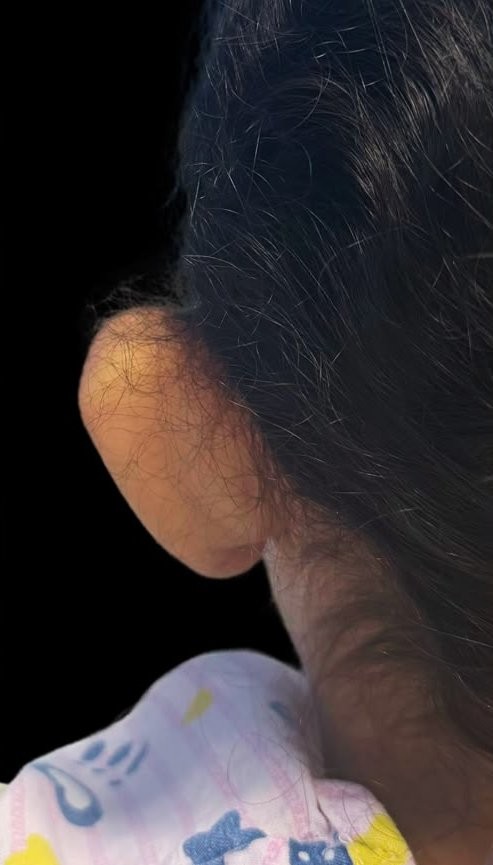

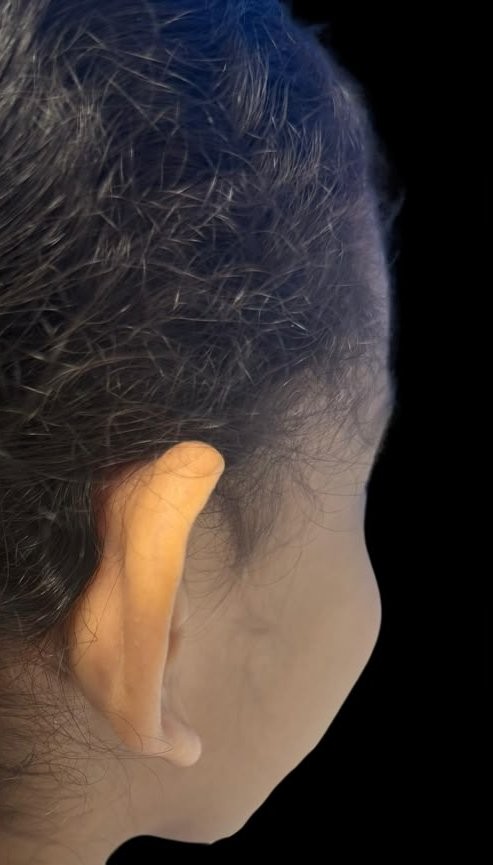
Individual results vary. Every face is different, and outcomes depend on anatomy, healing and the treatment plan agreed in consultation.
Frequently Asked Questions
At what age can otoplasty be performed?
Usually from around school age, when the ears have reached most of their adult size. There is no upper age limit for adults.
Will the scar be visible?
The incision is normally placed behind the ear in the natural crease, so the scar is usually well hidden.
Is the procedure painful?
Discomfort is usually moderate and managed with pain relief. Tenderness can persist for a few weeks.
Can only one ear be corrected?
Yes, if only one ear is prominent. The goal is always a balanced appearance of both ears.
Is the result permanent?
In most cases the correction is lasting. A small degree of recurrence can occur in some patients, which is why the headband period after surgery is important.
Other procedures
Begin with a private consultation
Our coordinator will contact you to arrange a convenient time.