
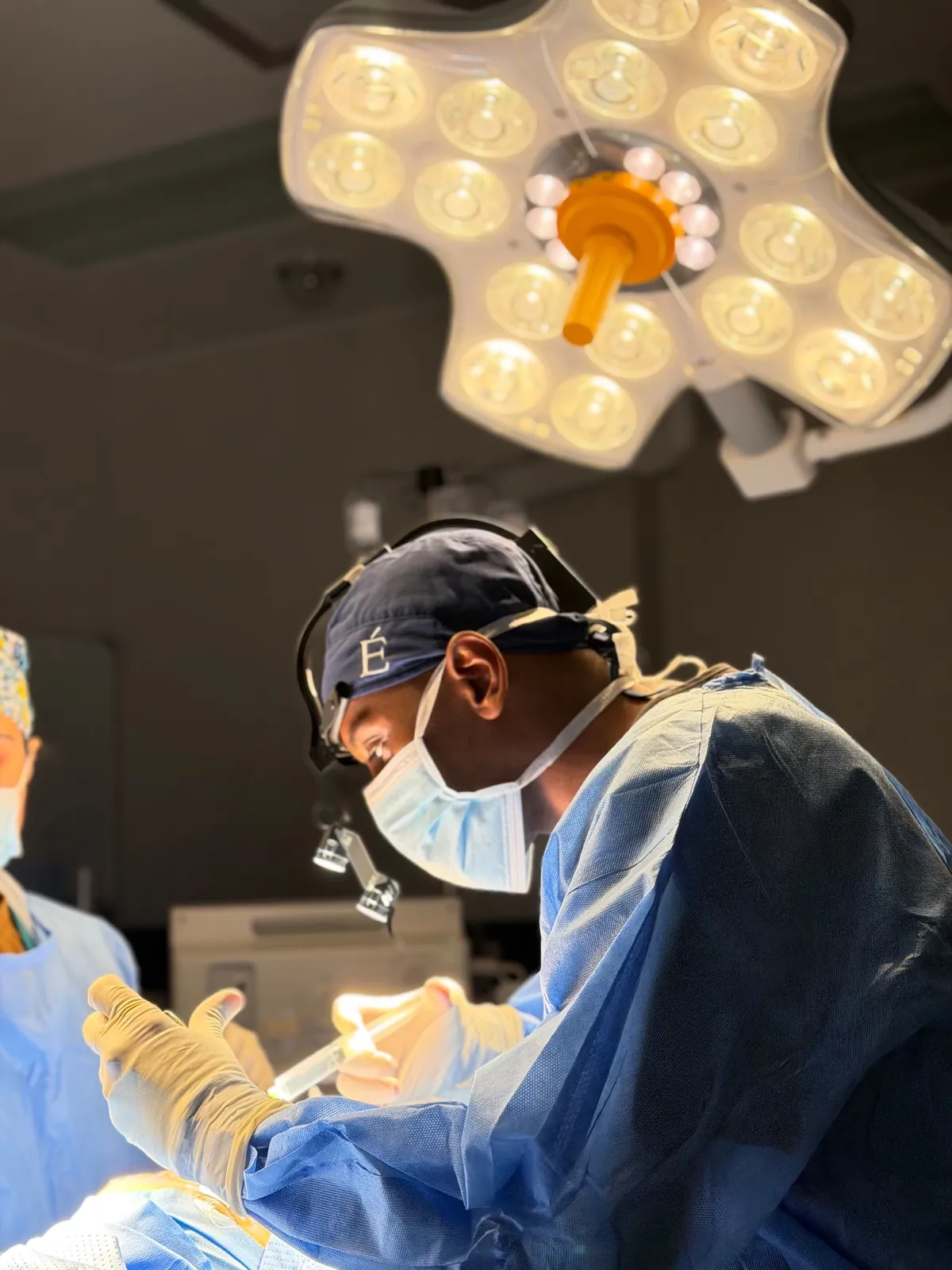
Rhinoplasty
Rhinoplasty (Nose Surgery)
Rhinoplasty reshapes the nose to bring it into balance with the rest of the face. Because the nose is also the gateway for breathing, Dr. Khair approaches every rhinoplasty as an ENT surgeon: form and function are planned together.
He performs both closed (endonasal) and open rhinoplasty, with particular expertise in the closed technique, a hallmark of his German training. The approach is chosen after examining your nose and understanding what you would like to change.
What is rhinoplasty?
Rhinoplasty is surgery on the bony and cartilaginous framework of the nose. Depending on the goal, it can reduce a dorsal hump, refine or support the tip, straighten a deviated nose, adjust width or projection, and improve the relationship between nose and lip.
When breathing is impaired, for example by a deviated septum or narrow nasal valves, functional correction can often be performed during the same operation (septorhinoplasty).
Open rhinoplasty
In the open approach, the incisions inside the nostrils are connected by a small incision across the columella, the skin bridge between the nostrils. The skin of the tip is lifted so that the cartilages can be seen directly.
This exposure can be helpful for selected complex reconstructions that require extensive cartilage grafting. The small columellar scar usually heals well, but it remains an external incision, and lifting the skin envelope generally means longer-lasting swelling of the tip.
Closed Rhinoplasty: Understanding the Technique
In closed, or endonasal, rhinoplasty, the entire operation is performed through incisions inside the nostrils. There is no incision on the columella and therefore no external scar.
Through these internal access points, the surgeon can reduce or reshape the bony and cartilaginous dorsum, perform precise osteotomies to narrow or straighten the nasal bones, correct the septum, refine and support the tip, and place cartilage grafts where needed. In experienced hands, the closed approach addresses the full range of common aesthetic and functional concerns.
Because the skin of the nasal tip is not lifted, the blood supply and the natural supporting ligaments of the nose are largely preserved. This usually means less swelling, particularly of the tip, a faster recovery and a result that becomes visible sooner.
The technique requires advanced training and a precise, three-dimensional understanding of nasal anatomy. It has a long tradition in Germany, where Dr. Khair trained, and it is central to his practice. Awareness of this approach in Saudi Arabia is still limited, which is why he takes the time to explain it to his patients.
As with every operation, the final choice of technique is made individually after examination.
- No external incision and no visible scar
- The natural support structures and blood supply of the tip are preserved
- Usually less swelling and a quicker return to daily life
- Suitable for most primary rhinoplasties and many revision cases
- Breathing problems can be corrected in the same operation
How the approach is chosen
During consultation, Dr. Khair examines the external nose, the inside of the nose and the quality of the skin, assesses breathing and listens to what you would like to change. The decision between closed and open rhinoplasty follows from this assessment, never from a fixed preference.
Closed and open rhinoplasty at a glance
A general overview. The approach that suits you is decided individually after examination.
- Incisions
Closed (endonasal)Inside the nostrils only
OpenInside the nostrils plus an incision across the columella
- External scar
Closed (endonasal)None
OpenSmall scar on the columella
- Tip support & blood supply
Closed (endonasal)Largely preserved
OpenSkin envelope is lifted; support is often rebuilt with sutures or grafts
- Swelling & recovery
Closed (endonasal)Usually less swelling and a faster recovery
OpenTip swelling often lasts longer
- Range of use
Closed (endonasal)Most primary rhinoplasties and many revisions
OpenSelected complex reconstructions with extensive grafting
- Surgeon's view
Closed (endonasal)Indirect; relies on precise anatomical knowledge and experience
OpenDirect visual exposure of the cartilages
| Closed (endonasal) | Open | |
|---|---|---|
| Incisions | Inside the nostrils only | Inside the nostrils plus an incision across the columella |
| External scar | None | Small scar on the columella |
| Tip support & blood supply | Largely preserved | Skin envelope is lifted; support is often rebuilt with sutures or grafts |
| Swelling & recovery | Usually less swelling and a faster recovery | Tip swelling often lasts longer |
| Range of use | Most primary rhinoplasties and many revisions | Selected complex reconstructions with extensive grafting |
| Surgeon's view | Indirect; relies on precise anatomical knowledge and experience | Direct visual exposure of the cartilages |
Who may be a suitable candidate?
- Adults (and adolescents after facial growth is complete) who are bothered by the shape of their nose
- People with breathing difficulties caused by septal deviation or valve problems
- Patients in good general health with realistic expectations
- Non-smokers, or patients willing to stop smoking before and after surgery
The consultation
The consultation includes a discussion of your goals and medical history, an examination of the nose inside and out, and standardised photographs. Dr. Khair explains which changes are realistic for your anatomy, which approach he recommends and why, and what recovery will involve.
Recovery overview
Recovery differs from patient to patient, but the following gives an orientation. Your personal aftercare plan is explained before surgery.
- A nasal splint is typically worn for about one week
- Visible swelling and bruising usually settle over the first two weeks
- Many patients return to office work after about 10 to 14 days
- Strenuous exercise is usually avoided for several weeks
- The final shape develops gradually; refinement of the tip can take a year or longer
Risks and limitations
As with any operation, rhinoplasty carries risks, including bleeding, infection, temporary or persistent changes in breathing, numbness, asymmetry and the possibility that a further correction is needed. These are discussed openly and in detail during your consultation.
Before & After
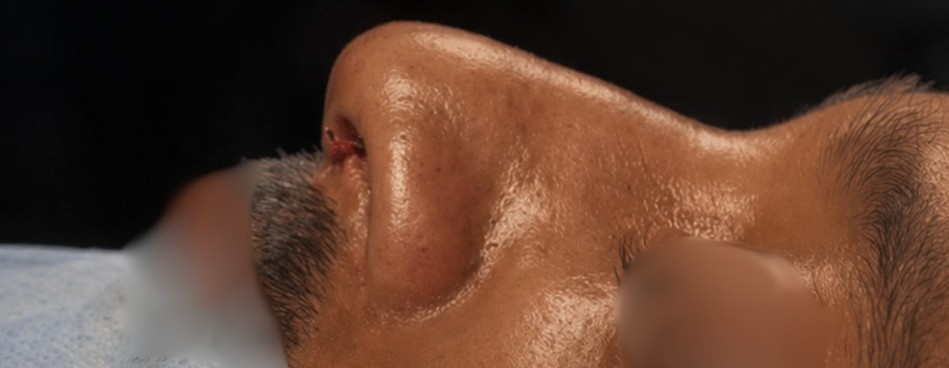
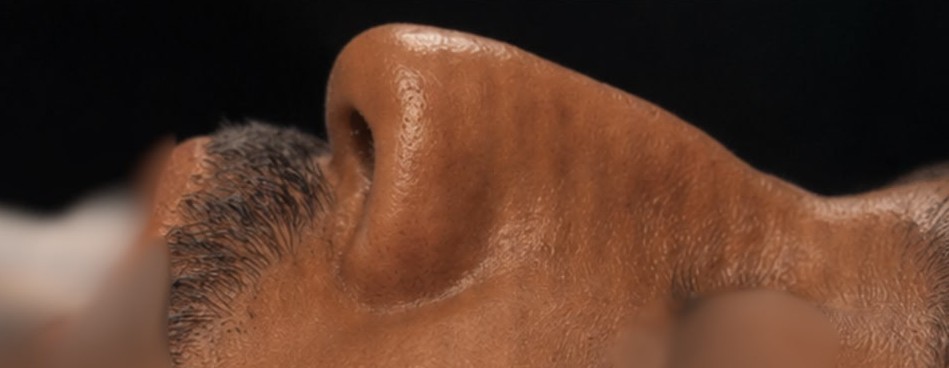

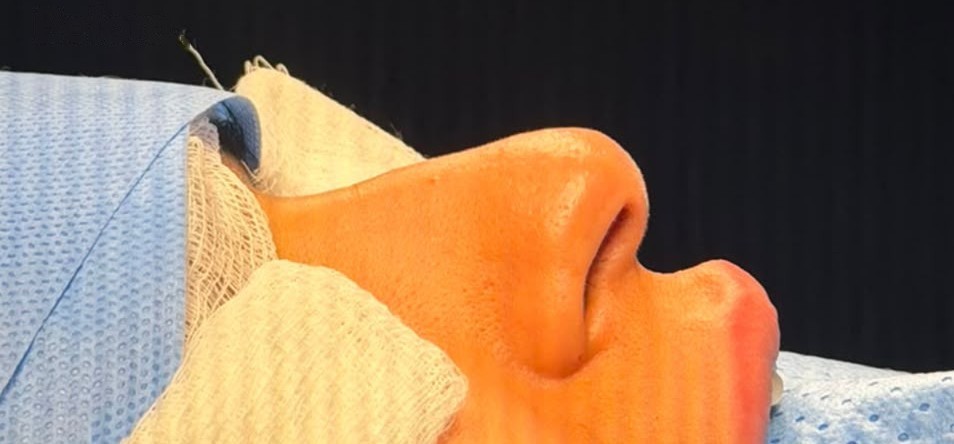
Individual results vary. Every face is different, and outcomes depend on anatomy, healing and the treatment plan agreed in consultation.
Frequently Asked Questions
Is closed rhinoplasty better than open rhinoplasty?
Both are recognised techniques. The closed approach offers clear advantages: no external scar, preservation of the nose's support structures and usually less swelling. In experienced hands it is suitable for most cases, while some complex reconstructions may benefit from the open approach. Dr. Khair recommends the technique after examining your nose.
Will there be a visible scar?
With closed rhinoplasty there is no external scar. With open rhinoplasty there is a small scar across the columella that usually becomes discreet once healed. If the nostril base is narrowed, small scars in the nostril crease may also be needed.
Can my breathing be improved at the same time?
Often, yes. If a deviated septum or narrow nasal valves affect breathing, functional correction can usually be combined with the aesthetic procedure.
How long does the operation take?
Duration varies with complexity, typically a few hours. Dr. Khair will give you an estimate after your consultation.
When will I see the final result?
Most swelling resolves in the first weeks, but the nose continues to refine for many months, especially the tip. The final result is usually assessed after about a year.
Is there a minimum age for rhinoplasty?
Aesthetic rhinoplasty is generally performed once facial growth is complete. Functional problems may be assessed earlier. Your individual situation is evaluated in consultation.
Other procedures
Begin with a private consultation
Our coordinator will contact you to arrange a convenient time.